Cao Lỗ. Though little known to the general public, this name resonates deeply in Vietnamese history. A discreet visionary, he left his mark by elevating blacksmithing far beyond its utilitarian purpose. You will discover a figure who transcended metallurgy to lay the foundations of a timeless craft. Through pioneering techniques and an unwavering pursuit of perfection, Cao Lỗ left an indelible mark on the world of Vietnamese artisanal knives that we admire today.
In ancient Vietnam, daily life was built on harmony with nature. Cultivating lush rice fields and navigating dense forests, the people constantly adapted to an environment that was both generous and demanding. At the heart of this adaptation were forged tools. Far more than simple practical objects, they embodied a deep symbiosis between humans and the elements, enabling an entire society to thrive.
At the time, each village relied on a master blacksmith. These artisans transformed raw metal into agricultural tools and weapons essential for protection. Among these creations, knives held a place of honor. A daily tool for cooking, hunting, or working, the knife was also an object of cultural transmission and, at times, a ceremonial piece.
It was in this context that Cao Lỗ emerged as a central figure. For him, working with metal was a deeply thoughtful act, where every detail mattered. His creations were not merely utilitarian; they carried an aesthetic and timeless dimension that still resonates in today’s traditions.
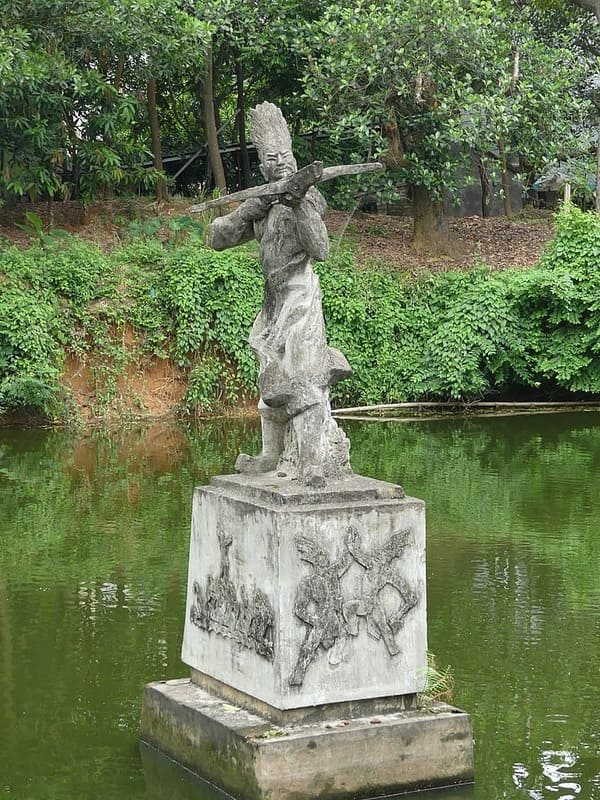
Cao Lỗ was a general under the reign of King An Dương Vương, around 300 BC. He is best known for crafting a legendary crossbow said to be capable of shooting dozens, even hundreds of arrows at once, according to ancient accounts. This earned him the nickname “Ông Nỏ,” meaning “Mister Crossbow.”
Naturally, much of this belongs to legend… but not entirely.
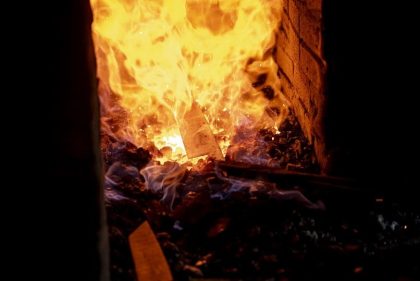
Recognized as the founder of Vietnam’s first iron forge, he discovered an iron mine in Diên Châu (Nghệ An province). It was there that the general established a workshop, giving birth to a metallurgical tradition that later spread to numerous villages.
Cao Lỗ is believed to be the engineer behind a crossbow capable of firing multiple arrows at once. The discovery of bronze arrowhead molds, along with a large stock of three-sided arrows (a true innovation in their historical context) near the Cổ Loa citadel, leaves little room for doubt. Additionally, numerous visual depictions of this crossbow appear on bronze drums, bas-reliefs, and ancient Chinese documents, all dating back to that era.
Beyond this story, Cao Lỗ was not just another blacksmith. He was a pioneer, a brilliant military engineer, and an exceptional craftsman who brought a revolutionary approach to Vietnamese craftsmanship. Trained in a rugged and unforgiving environment, he quickly developed a vision that surpassed the techniques of his time.
This legacy still lives on today, particularly in the village of Nho Lam, where Cao Lỗ is venerated as a deity and honored with an annual ceremony recognizing his foundational role.
Though his name may have faded from official historical records, the echo of his genius remains alive through the generations that have carried on his teachings.
Cao Lỗ perfected metallurgy in two crucial ways: developing high-quality alloys and exploring revolutionary blade shapes tailored to various needs. He was particularly known for his ability to balance strength and flexibility, two properties that are often difficult to reconcile in steelworking. His knives and weapons were not just tools but true masterpieces of ingenuity—practical solutions to the specific challenges of daily life at the time.
The legacy of Cao Lỗ has not faded over the centuries. On the contrary, his innovations laid the foundation for the evolution of Vietnamese blacksmithing expertise. From the precise control of temperatures to the careful selection of alloys, his discoveries are still practiced today in contemporary blacksmith workshops.
Cao Lỗ notably introduced the meticulous incorporation of local minerals into his alloys, giving his blades unmatched durability. This careful attention to locally available resources continues in modern practices, where Vietnamese artisans prioritize respect for materials and sustainable processes.
In parallel, his ability to blend function and aesthetics shaped the philosophy of Vietnamese craftsmanship. The connection to natural elements remains a living tradition, and even today, each blade carries a subtle spiritual link, paying homage to the father of Vietnamese blacksmithing.
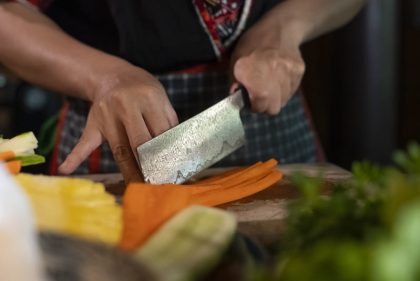
The Vietnamese artisanal knife, as we know it today, is far more than a simple tool. It is a creation imbued with meaning, where impeccable technique meets cultural heritage. The precise slicing of herbs for a dish like phở or the meticulous preparation of ingredients for gỏi cuốn (spring rolls) is made easier by well-balanced, high-performance knives, direct descendants of Cao Lỗ’s expertise.
These tools also hold symbolic significance in Vietnamese life. Gifting a knife was never a trivial act in traditional villages—it was a gesture associated with protection, luck, or an implicit blessing. More than that, each knife perpetuates a philosophy of craftsmanship where every curve and angle is designed to merge efficiency and beauty.
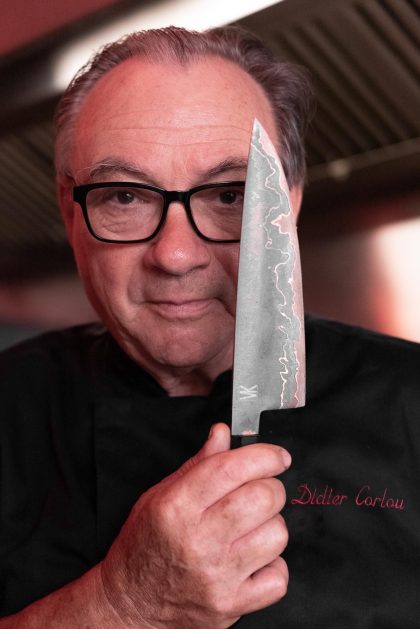
Over the centuries, Vietnamese craftsmanship has expanded far beyond its borders. Handcrafted knives have captured the attention of Michelin-starred chefs and gastronomes around the world. This phenomenon is not just a passing fascination; it is built on undeniable quality that meets the demands of modern kitchens.
Far from standardized production, Vietnamese knives remain true artisanal treasures. Their popularity continues to grow among collectors, especially in Europe.
In a world increasingly driven by mass industrialization, Vietnamese craftsmanship, inspired by the legacy of Cao Lỗ, stands as a response to the modern pursuit of authenticity and sustainability.