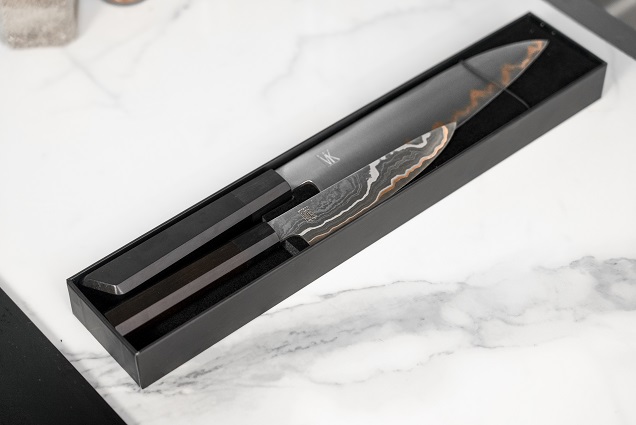
Damascus steel: Dive into the secrets of a legendary steel
Have you ever been captivated by the enchanting patterns that weave along a knife blade? These hypnotic designs are not the product of chance but the distinctive hallmark of Damascus steel—a material as mysterious as it is legendary. Renowned for its unique beauty and exceptional properties, Damascus steel combines aesthetics and performance like no other. In this article, we invite you to dive into the secrets of this mythical steel. Discover its fascinating origins, the ancestral techniques of its fabrication, and its modern use in Vietnamese artisanal cutlery. Prepare yourself for a journey to the heart of millennia-old craftsmanship that continues to captivate enthusiasts around the world.
Historical origins of damascus steel
Damascus steel dates back more than 2,000 years to the heart of ancient Middle Eastern civilizations. Used to forge swords and blades of exceptional quality, this steel was renowned for its unique combination of hardness and flexibility. The blacksmiths of that era mastered ancestral know-how, creating blades with characteristic wavy patterns that testify to unparalleled artisanal mastery.
Surrounded by legends and myths, Damascus steel acquired a mystical aura. It is said that these blades could cut opposing swords in half, pierce the strongest armors, or even split a hair floating in the air. These tales illustrate the almost surreal properties attributed to this steel, making each blade a true work of art endowed with extraordinary “powers.”
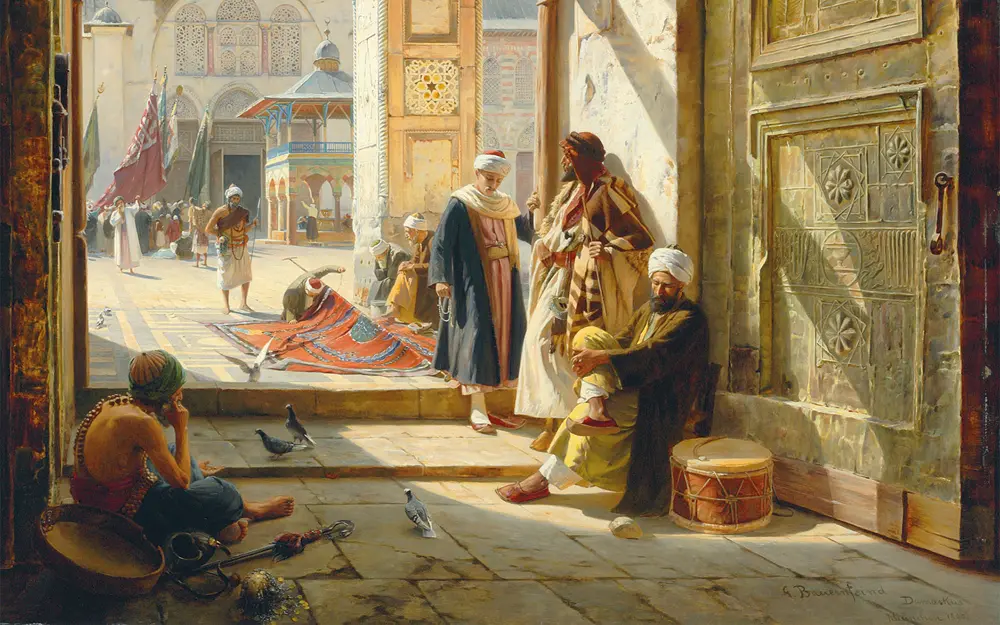
The name “Damascus” comes from the city of Damascus, the capital of Syria, which was an important commercial and cultural crossroads during the medieval period. It was through this emblematic city that Damascus steel blades were widely disseminated, gaining international renown. The city was famous not only for trading these exceptional blades but also for the advanced forging techniques practiced there. Thus, the term “Damascus steel” became synonymous with superior quality and artisanal beauty.
The Secrets of Making Damascus Steel
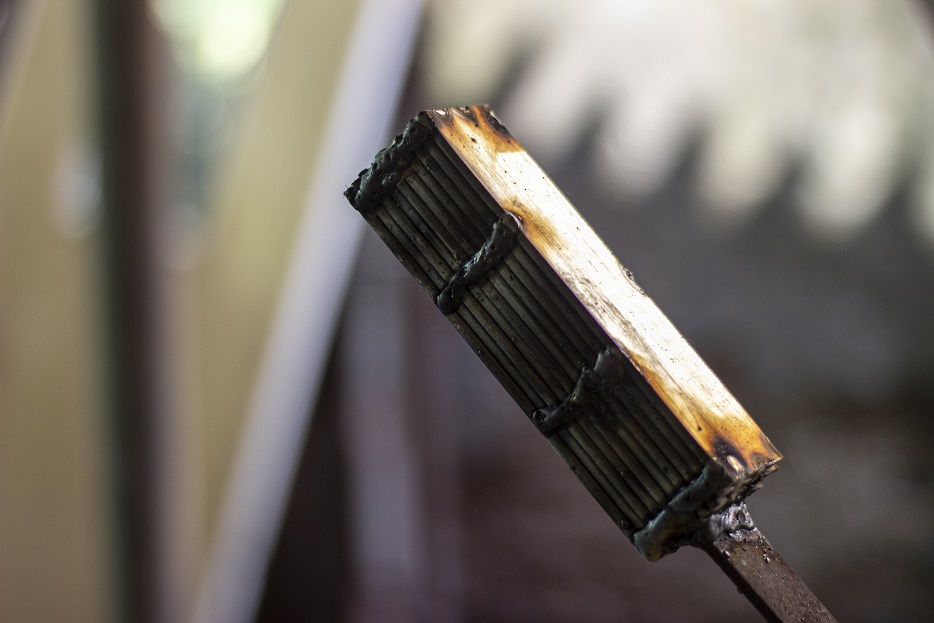
Damascus steel is the result of ancestral craftsmanship, a lost art that continues to arouse admiration and curiosity. At the heart of this mystery lies a traditional forging process involving the folding and welding of multiple layers of steel. Blacksmiths began by stacking steels with different carbon contents. This stack was heated to high temperatures until it reached ideal incandescence, then hammered to fuse the layers into a single solid mass.
This process was repeated several times: the blade was folded, heated, and hammered again. Each folding doubled the number of layers, creating a blade composed of hundreds or even thousands of layers. The mixture of high and low carbon steels gave the blade a unique composition. The high-carbon steel provided hardness and exceptional sharpness, while the low-carbon steel offered the necessary flexibility to prevent the blade from being too brittle.
After this meticulous forging work comes the crucial step of revelation. The polished blade is immersed in a mild acidic solution, such as ferric chloride. This immersion accentuates the contrasts between the layers of high and low carbon steel. The emblematic wavy and swirling patterns of Damascus steel then appear, transforming the blade into a true work of art. Each revelation is unique, reflecting the blacksmith’s expertise and completing the exceptional character of the blade.
It is this complex process that gave birth to the characteristic patterns of Damascus steel. The differences in composition between the layers created waves, swirls, and other shapes on the polished surface of the blade. Each knife thus bore a unique pattern, reflecting the number of folds and the blacksmith’s expertise. These hypnotic motifs are not merely aesthetic; they attest to the quality and structural complexity of the blade, making each piece a work as striking as it is unique.
Today, although the original manufacturing techniques have been lost over time, Damascus steel continues to fascinate and inspire artisans around the world. Vietnamese blacksmiths, in particular, perpetuate this tradition by combining ancestral methods with modern innovations, offering blades that captivate both by their aesthetics and their performance.
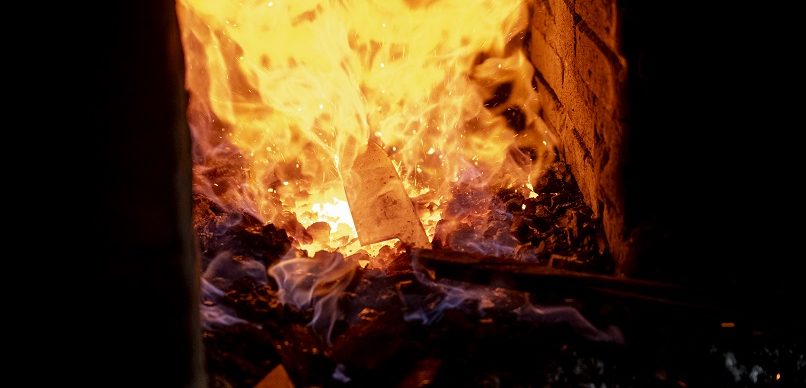
Damascus Steel in Vietnamese Craftsmanship
Damascus steel has found new momentum in the hands of Vietnamese artisans, who have skillfully integrated this legendary material into their traditional forging craftsmanship. Fascinated by the beauty and exceptional properties of Damascus steel, these talented blacksmiths have adopted and adapted ancestral techniques to create blades that reflect both their cultural heritage and the excellence of this mythical steel.
Vietnamese blacksmiths use specific methods that combine traditional know-how with innovation. They carefully select high-quality steels, which they fold and weld multiple times to achieve the unique patterns characteristic of Damascus steel. The use of manual hammers and charcoal-fired furnaces allows precise control over temperature and forging, ensuring a blade of exceptional quality. Some artisans also incorporate local materials, such as unique metals or specific alloys, to add an authentic touch to their creations.
What distinguishes Vietnamese craftsmanship is its ability to create a perfect harmony between tradition and modernity. The artisans respect ancestral forging techniques while incorporating contemporary designs that meet the needs of today’s chefs. They innovate by experimenting with ergonomic shapes, exotic wooden handles, or composite materials, thus creating knives that are both functional and aesthetically remarkable.
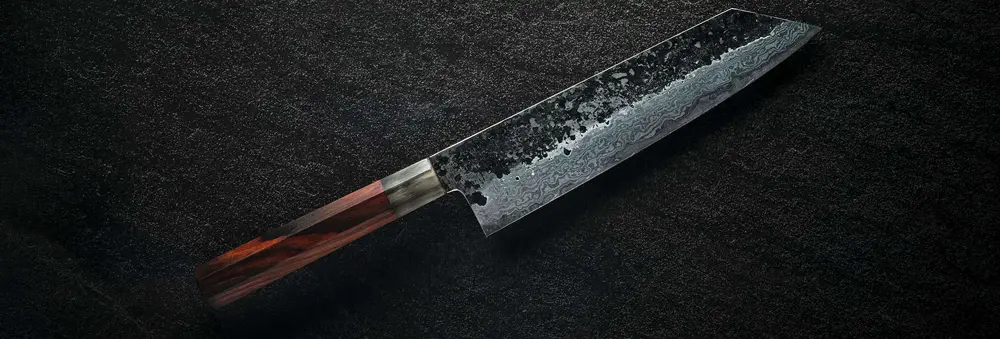
Among the emblematic models is the Vietnamese chef’s knife in Damascus steel, recognizable by its slightly curved blade and unique wavy patterns. Its cutting precision and perfect balance make it a prized tool for both professionals and discerning amateurs. Each knife is a unique work of art, forged with passion, that tells a story and offers an unparalleled culinary experience.
How to Recognize Genuine Damascus Steel?
Distinctive Signs
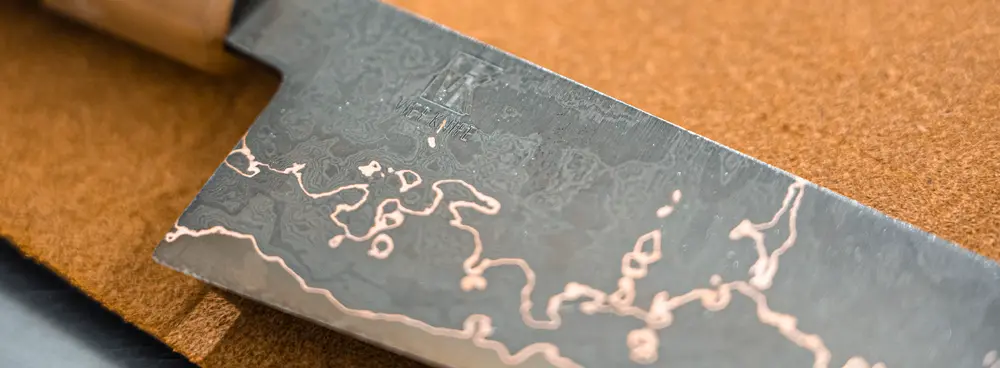
Identifying a genuine Damascus steel knife requires a keen eye. The first clue is the presence of authentic patterns that run through the entire thickness of the blade, not just its surface. These motifs, often wavy or swirling, are the result of folding and welding multiple layers of steel. By observing the blade from different angles, you should see that these designs are deep and vary slightly, a sign of artisanal craftsmanship. Each blade is unique, and the patterns are never perfectly repetitive or uniform.
Avoiding Counterfeits
Unfortunately, the market is flooded with counterfeits that imitate the appearance without offering the exceptional properties of Damascus steel. These blades are often engraved or printed to reproduce the characteristic patterns, but these designs are superficial and can fade over time. To avoid disappointment, beware of prices that are too low and patterns that are too perfect. Genuine Damascus steel displays subtle variations that reflect artisanal expertise. Do not hesitate to ask for detailed information about the manufacturing process and to verify the seller’s reputation.
Indicative Price
It is important to understand that genuine Damascus steel has a cost justified by the complexity of its fabrication and the time invested by the artisan. Cheap blades presented as Damascus steel are often low-quality imitations. An authentic Damascus steel knife represents an investment, reflecting the value of artisanal work, the quality of the materials, and the exceptional performance of the blade. Although the price is higher than that of a standard knife, you will benefit from an exceptional tool that will accompany you for many years.
Damascus Steel Today: Between Tradition and Modernity
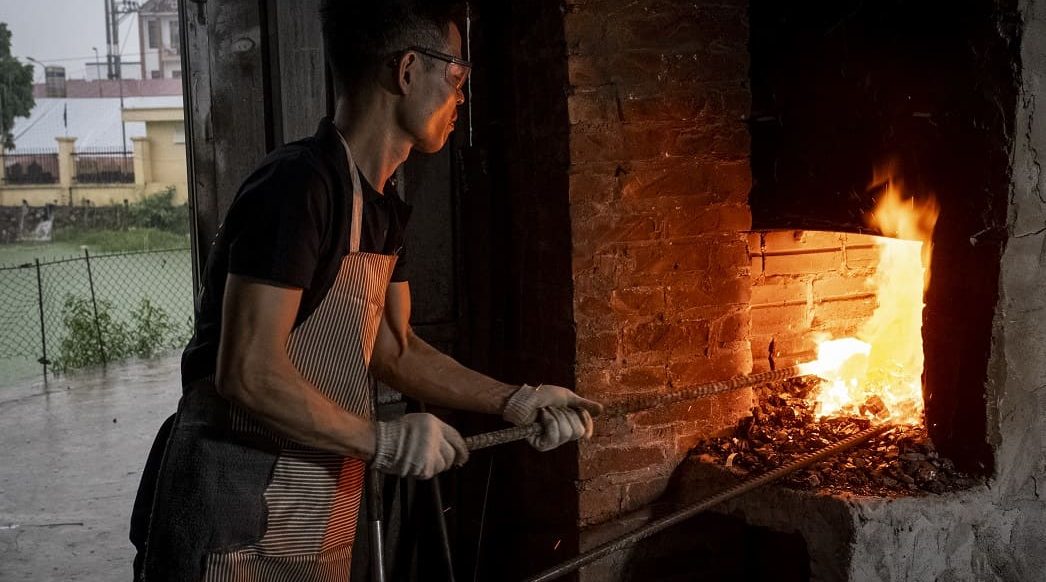
Today, Damascus steel is experiencing an exceptional resurgence of interest. The enthusiasm for quality handcrafted products has revived this ancestral art. Consumers seeking authenticity and unique pieces are turning to objects that tell a story. Vietnamese artisans, proud of their cultural heritage, have seized this opportunity to bring traditional Damascus steel forging techniques back into the spotlight. This renaissance reflects a desire to preserve craftsmanship while meeting the expectations of a modern and demanding clientele.
New technologies play a crucial role in the rediscovery and evolution of Damascus steel. Contemporary blacksmiths now have advanced tools, such as temperature-controlled furnaces and hydraulic power hammers, which allow them to precisely replicate ancient techniques while enhancing the quality and precision of the blades. These innovations also facilitate the experimentation with new patterns and designs, merging tradition and modernity to create truly unique pieces.
While Damascus steel is inseparable from cutlery, its use has extended to other fields. In jewelry, it is prized for its elegant patterns and robustness, giving rise to pieces like rings, bracelets, or pendants of rare beauty. The luxury industry adopts it for exclusive accessories such as watches and high-end pens. Even the industrial sector is interested in it, particularly for the manufacture of precision tools and mechanical parts requiring exceptional strength. This versatility demonstrates Damascus steel’s ability to transcend eras by adapting to contemporary needs.
Conclusion
Damascus steel is much more than just a material; it’s a legend that spans centuries, combining a fascinating history, exceptional craftsmanship, and incomparable performance. Each Damascus steel knife is a unique work of art, the result of ancestral know-how that gives the blade hypnotic beauty and formidable efficiency. By choosing such a knife, you bring into your daily life an object that transcends time and cultures, transforming every culinary gesture into a rewarding experience.
Explore our exclusive collection of Vietnamese handcrafted Damascus steel knives and treat yourself to an exceptional piece.
FAQ
Is damascus steel suitable for daily kitchen use?
Absolutely, Damascus steel knives are perfectly suited for daily kitchen use. Thanks to their exceptional sharpness and durability, they facilitate even the most delicate cutting tasks. However, it is important to maintain them properly to preserve their performance and unique aesthetics.
Are damascus steel knives corrosion-resistant?
Damascus steel knives offer good resistance to corrosion, but they are not completely stainless. The combination of steels used may include elements sensitive to oxidation.
How to maintain a damascus steel knife to preserve its patterns?
To maintain the beauty of the wavy patterns on your Damascus steel knife, follow these maintenance tips:
- Hand Washing: Always clean your knife by hand with warm water and mild soap. Avoid the dishwasher at all costs, as it can damage the blade and handle.
- Immediate Drying: After cleaning, carefully dry the blade with a soft cloth to prevent corrosion and water spots.
- Oil Your Blade: Apply a thin layer of food-grade oil (such as mineral oil) to the blade to protect the steel and maintain the shine of the patterns if you are not using your knife for an extended period.
- Proper Storage: Store your knife in a dry place, ideally in a sheath or on a magnetic strip, to avoid shocks and moisture.
- Gentle Sharpening: Use an appropriate sharpening stone to preserve the blade’s edge without altering the patterns.
What is the difference between traditional and modern damascus steel?
Traditional Damascus steel was made using ancient techniques originating from India and the Middle East. It was distinguished by a specific composition and natural patterns resulting from the metal’s crystallization process. These manufacturing methods were lost over time, making traditional Damascus steel extremely rare.
Modern Damascus steel is obtained by forging together several types of steels with different carbon contents. This folding and welding process creates the characteristic patterns on the blade. Although modern techniques do not exactly reproduce the original steel, they allow the manufacture of blades with exceptional performance and similar aesthetics, combining tradition and innovation.
Where can i buy a genuine vietnamese damascus steel knife?
You can discover and acquire a genuine Vietnamese Damascus steel knife in our specialized online store. We offer an exclusive collection of handcrafted knives forged by our master Vietnamese blacksmith. Each piece is unique, certified authentic, and combines traditional know-how with modern quality standards. Click here to explore our selection and find the knife that will enhance your kitchen!